

As countries in Africa emerged from colonialism in the mid-twentieth century, many expressed their independent identities through architecture. This process continues several decades later, exemplified by several new museums in West Africa, recently completed or in planning. Although varying in purpose and form, they have some common goals: addressing the need for restitution of many artifacts taken during colonialism and mostly kept in European museums; and defining a museum with local identity as opposed to a non-contextual import.
The history of the museum as a typology is a long and complex one. Since prehistoric times, humans have built collections, as evidenced by burial customs discovered by archaeologists. The idea of a modern museum, i.e., a publicly accessible collection, started in Renaissance Europe, when avid collectors bequeathed their artifacts to public bodies. Exploration and empire increased collections and museums multiplied in number in the seventeenth and eighteenth centuries. The buildings themselves were often monumental, built to celebrate imperial power, but they often ignored the fact that large portions of their collections were taken without the consent of their communities.
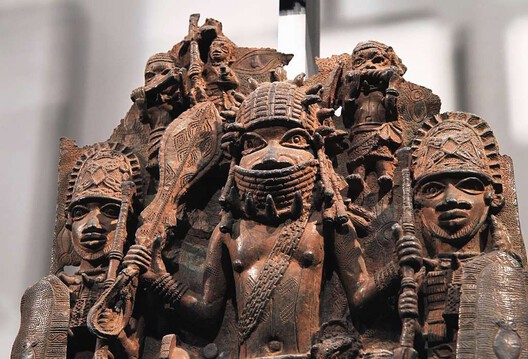
Over the years, demands for restitution grew, from Africa and from other continents as well. The Benin Bronzes, a collection of thousands of intricate cast pieces from Benin City, plundered during the British Expedition of 1897, especially drew much attention. One of the arguments given against the return of objects to their countries of origin was the lack of adequate facilities to house them. Thus, the impetus for a new generation of museums is the establishment of state-of-the-art repositories for returned museum pieces.
Museum of Black Civilizations, Dakar, Senegal
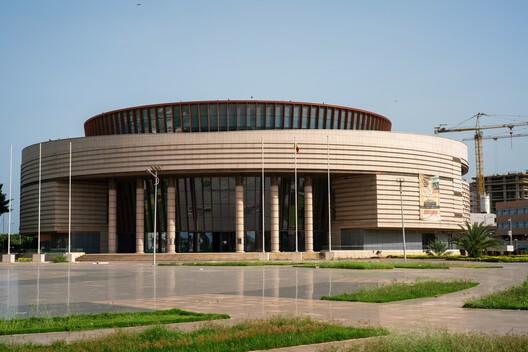
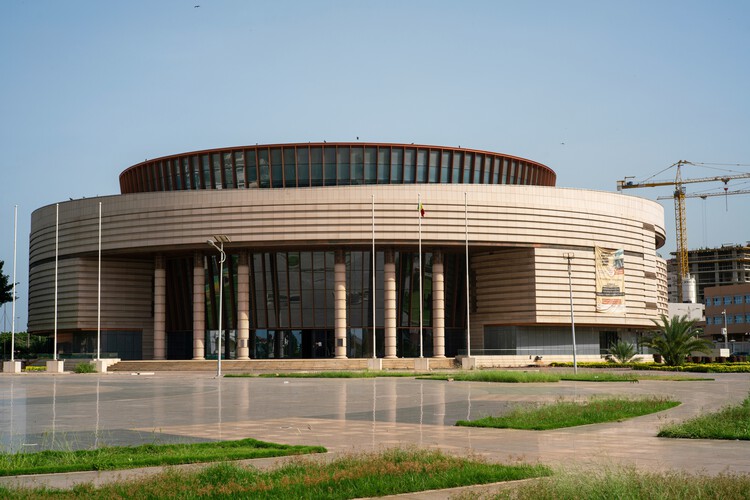
The first of these is the Museum of Black Civilizations in Dakar, Senegal, which opened in December 2018. It fulfills an idea first proposed in the 1960s by Senegal's visionary first president, Léopold Sédar Senghor, who believed that development should be centered around arts and culture. Senghor wanted a place that would celebrate black identity, history, and creativity, providing Africans on the continent and the diaspora with the opportunity to reclaim and curate their own narratives. The project was never realized during Senghor's time, but was resurrected more recently. The museum spans 14,000 square meters and accommodates 18,000 exhibits. Its scale is comparable to other recent cultural accomplishments such as the Dakar Art Biennale and the African Renaissance Monument.
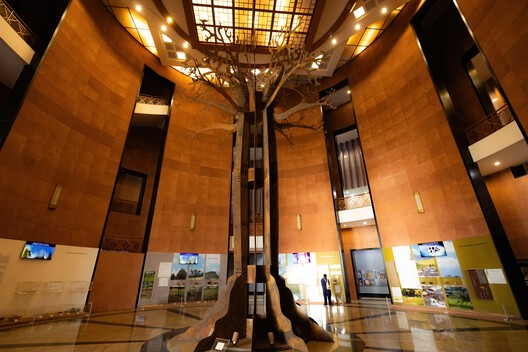
The museum's circular, four-story structure is inspired by the impluvium huts of Casamance and the Great Zimbabwe ruins. Upon entering, visitors are taken up the building via a gently sloping walkway around the atrium. Moving away from ethnographic approaches, its exhibitions included "Africa Now" and "The Cradle of Humankind", as well as contributions from the African diaspora from Haiti and Cuba. It therefore contributes to decolonization efforts by redefining how African history is told. Finally built with a grant from China, it was originally designed by Mexican architect Pedro Ramírez Vázquez before being completed by the Beijing Institute of Architectural Design.
John Randle Centre for Yoruba Culture, Lagos, Nigeria
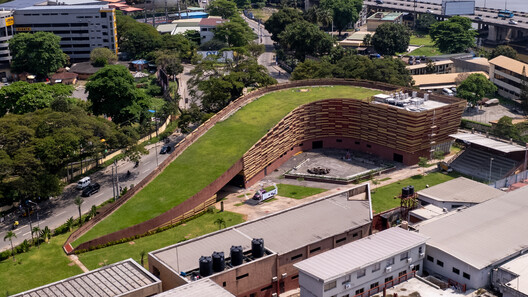
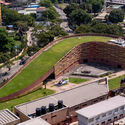
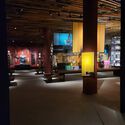
The John Randle Centre for Yoruba Culture in Lagos is a vibrant reimagining of the museum concept. Unlike the National Museum nearby, built during colonial times, this space is described by lead architect Seun Oduwole as "unapologetically Yoruba". Its curved form has a facade of earth-toned concrete reminiscent of traditional Yoruba buildings and a gold lattice inspired by indigenous craftsmanship. Visitors enter a sound-filled environment featuring storytelling spaces, deity exhibitions, and an immersive audiovisual display of Yoruba mythology.
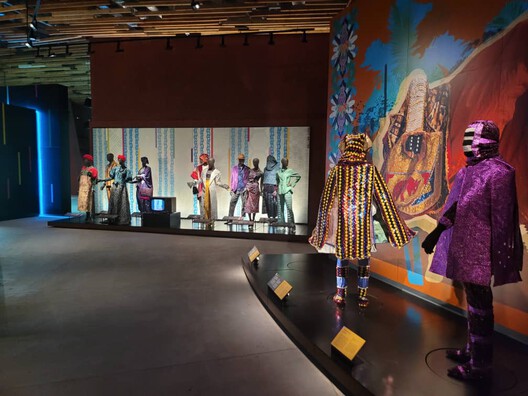
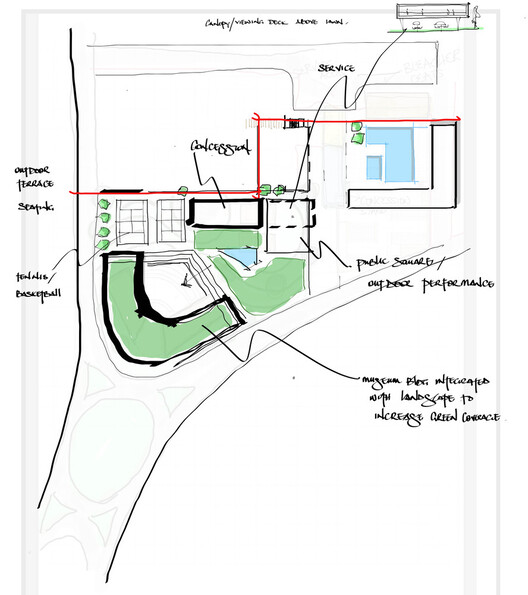
The museum is part of a wider urban regeneration project, honoring Dr John Randle, who built the site's original swimming pool to provide swimming lessons and prevent the prevalent incidents of drowning. Alongside the museum, there are restaurants serving Yoruba cuisine, a library, seminar rooms, and a gift shop. According to the architect, the center aims to challenge traditional museology by becoming a "theater of living memory" rather than a static archive. Contemporary culture is celebrated through items like the stage costume of Afrobeat music artist Fela Kuti, while talks are ongoing for the return of historic Yoruba artifacts from the British Museum.
Museum of West African Art, Benin City, Nigeria
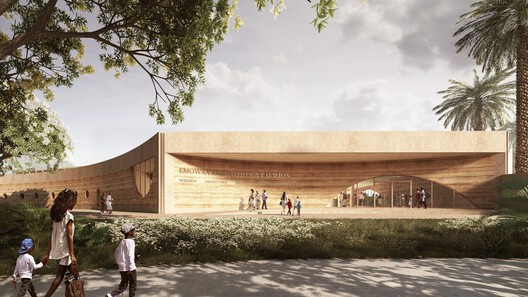
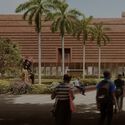
The Museum of West African Art (MOWAA), set to open in Benin City by the end of 2025, is a major new cultural institution designed to reclaim and celebrate African heritage, particularly as restitution of looted artifacts like the Benin Bronzes commences. With a design team led by Adjaye Associates, the museum's form is inspired by the layout of historic Benin City, spanning a 6-hectare campus with multiple galleries, performance areas, memorial gardens, and research facilities. Its completion counters long-held narratives that Africa lacks the infrastructure to care for its heritage, providing state-of-the-art conservation labs and climate-controlled storage.
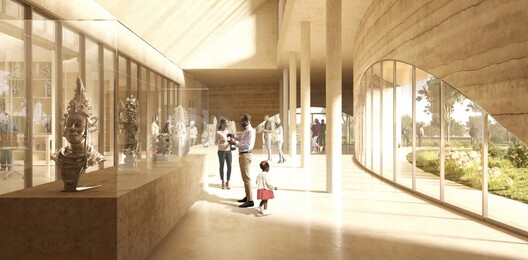
MOWAA is expected to hold the world's most comprehensive collection of Benin Bronzes. Part of the campus is the MOWAA Institute, nicknamed the "brainbox", which serves as a hub for research, training, and collaboration. Other spaces include the Rainforest Gallery, an outdoor exhibition space that incorporates a replanted rainforest, alongside Artisans Hall and a boutique Art Guesthouse, all aiming to support local creatives and attract global scholars. MOWAA has been funded by international partners, including the German government and the British Museum, and remains independent and non-profit.
Bët-bi, Senegal
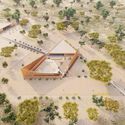
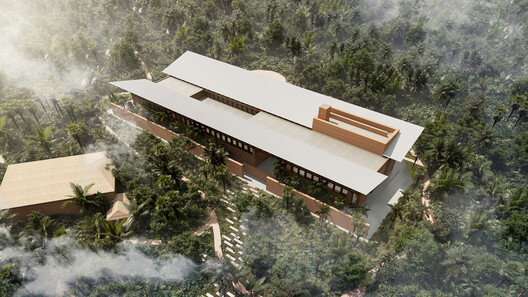
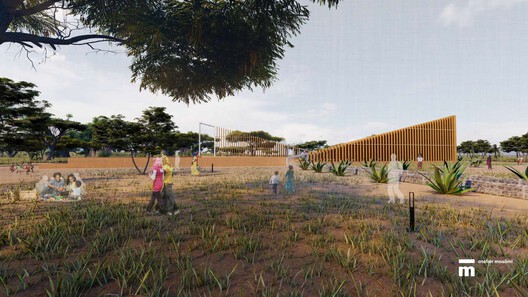
Bët-bi, meaning "the eye" in Wolof, is a museum and cultural center currently under planning in southwestern Senegal near Kaolack, a region rich with ancient stone megaliths and four UNESCO World Heritage sites. Designed by atelier masōmī and commissioned by the Josef and Anni Albers Foundation/Le Korsa, the museum seeks to honor the area's deep historical and spiritual roots, particularly those of the Serer and Mandinka peoples. The design draws on local traditions and cosmology, incorporating triangular forms that reflect the tripartite relationship between natural elements, ancestors, and the living. The galleries are sunken into the ground to reflect the sanctity of the land.
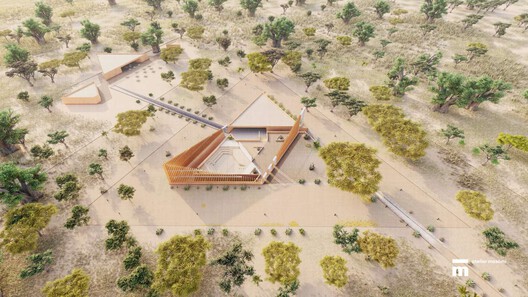
Spanning 1,000 square meters, Bët-bi will include exhibition spaces, community rooms, event areas, and a library. Its mission is to be an inclusive, accessible space celebrating both contemporary and historic African art. A key focus is education and community engagement, including initiatives for local involvement and international exchange through internships and curator programs. Importantly, Bët-bi will support the global movement to repatriate African cultural objects, dedicating an exhibition space to returned artifacts. Collaborations with local artisans and institutions aim to foster knowledge exchange and preserve traditional skills. By embedding itself in the landscape, both physically and culturally, Bët-bi redefines what a 21st-century museum can be for West Africa and beyond.
The four museums are by no means the same. The Museum of Black Civilizations is a trans-continental project resurrected from the mid-twentieth century, although its ideas had long foresight. The John Randle Centre is more community-facing, reflecting a specific culture. The MOWAA is a large complex serving multiple functions with a regional agenda, while the Bët-bi is a smaller, rural museum. Their conception within a short period of time is evidence of changing attitudes towards museology. All four are intended to house repatriated artifacts as part of their agendas, presenting a compelling argument in the long-running debate on restitution.
This article is part of the ArchDaily Topics: The Architecture of Culture Today. Every month we explore a topic in-depth through articles, interviews, news, and architecture projects. We invite you to learn more about our ArchDaily Topics. And, as always, at ArchDaily we welcome the contributions of our readers; if you want to submit an article or project, contact us.


